
From the top of Monastery St., make a right and descend one block along left side of Monastery Ave.
StepTrek Route: Gold Route 2018
Gold Route 2018
-
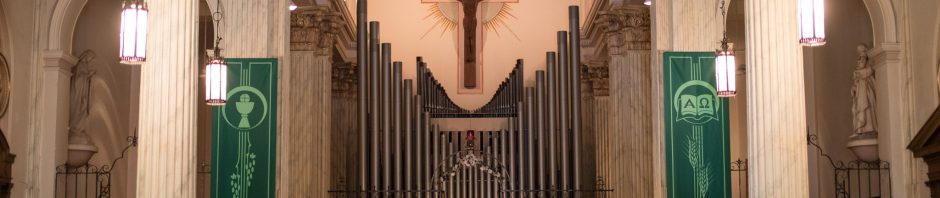
* St. Paul of the Cross Monastery
Known as the barefoot missionaries, the Passionists vowed to live a life of prayer, poverty, penance and solitude. The first bishop of Pittsburgh invited the Italian order over in 1852. Designed by the architect Charles Bartberger, who also designed St. Michael Church, the church was completed in 1859 in the midst of an 11 acre compound chosen for its serenity, natural beauty and seclusion. The architectural style is Romanesque. The interior rose window is a copy of one in Reims, Germany.
-
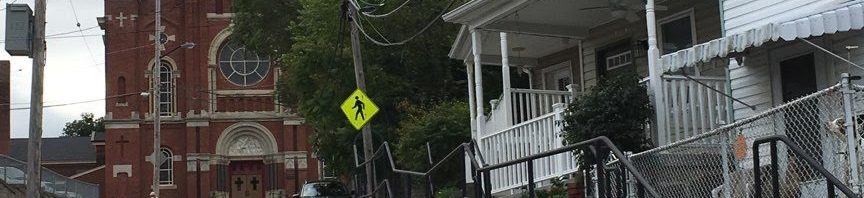
Monastery St. Steps
Cross street and make left to ascend 15 steps on the right side. These steps and sidewalk were rebuilt a few years ago as part of a project to replace a larger set of steps that ran the length of Monastery. Ahead is St. Paul of the Cross Monastery.
-
St. Thomas St.
Continue up St. Thomas to Monastery St. Stay right to climb 5 steps. Look right at downtown and the rivers.
-
St. Thomas St. Steps
Make left and ascend the 78 steps that lead to St. Joseph’s Way and St. Thomas St.
-
Hackstown St.
At the top of St. Michael Steps is Hackstown St. Cross to St. Thomas St. Steps, which are to the right.
-
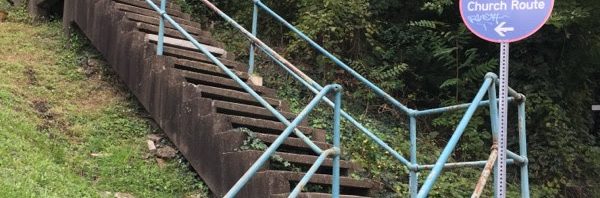
St. Michael Steps
At corner of Brossville & Pius Streets is the former St. Michael Church. When ready, cross to St. Michael Steps on the opposite side and climb these 150 steps.
-
Brosville St. Steps
Welsh Way bends to the right and meets S. 12 St. at Brosville St. Be careful as you cross to opposite side and turn right to climb 44 steps on left side of street.
-

* The Dirty Dozen
Each November, Pittsburgh hosts a 50-mile bike race that goes up 13 of its steepest hills. Welsh Way is one of the Dirty Dozen. Another is Eleanor St. on the Black Route.
-
Welsh Way
Continue down Welsh Way. The Knoxville Incline, which began below on Bradish St., once climbed through the ravine to the right behind the collection of small, 1890’s houses. Remnants of the inclineメs retaining walls can still be seen in the rear yards. It was the longest incline in Pittsburgh and the only one to curve as it ascended.